
Rook to f5. Checkmate.
How is it that some routinely smoke their opponents in a game where both sides have the identical force, there’s no luck of the draw, and the entire playing field is out in the open? While there are many cliché life lessons from the game of chess, there’s an often-overlooked concept embraced by true masters.
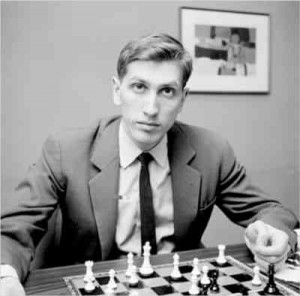
In chess, there’s a scoring mechanism whereby each piece is worth a certain number of points. A knight is worth three, a meager pawn’s value is one, while the mighty queen is worth nine. So it would follow that trading two pieces of equal value would be an even trade, right?
Enter the notion of tempo. If you and I were to exchange even pieces, one of us may actually win the battle. If I blow five moves to make the trade but you only expend three, you win the exchange and gain a “tempo of two.” Or if you advance and then have to retreat, thereby wasting a move, you’ve “lost a tempo.” While not technically part of the chess scoring system, Grand Masters use tempo to win championships. The more they can accomplish with the least number of moves, the better their odds of success.
You don’t have to be a chess nerd like me to see the parallels in business. In our highly competitive world, tempo can propel you to new heights when harnessed or doom you to shortfalls when squandered. It isn’t only your ability to deliver an outcome; seizing your potential can lie in the number of moves it takes you to get there.
We’re all at the mercy of the same 24-hour clock. Only so many days per pay period, weeks per calendar quarter. Since we can’t expand time, we need to improve productivity to rise above the competition and reach our next level of greatness. Finding the most direct route from point A to point B, eliminating as many steps and diversions as possible, will fuel your performance.
Does it typically take you three meetings to close a sale? How could you cut it to two? Are there 18 steps in your production process? Reduce a few and you’ll expand your capacity. Simply put – if you’re taking twice as long to reach the same outcome as your competition, you’re losing ground.
Since they started tracking chess statistics way back in 1851, the player who moves first wins 55.3% of the time. In other words, having just a tiny tempo advantage drives victory over the long run. If you’re looking for a new line of attack in your own game of life, use tempo to drive progress. Do so, and you’ll be on a direct path to success, one (highly efficient) move at a time.