
Invent Your Own Language

I’ve often wondered why some organizations enjoy a disproportionate share of the wins. It’s easier to explain in business when a company might have a bigger war chest or better real estate or more efficient software. But it gets more confusing in sports, when teams must play with the same number of players by the same rules and draw from the same pool of talent.

The New England Patriots have played in nine of the last 20 Super Bowls, winning six of them. The Montreal Canadiens have won 24 Stanley Cups, nearly double the number of the next closest team. You can’t solely point to individual talent in team sports, so you have to examine the philosophy and culture of the organizations to tease out their formula for success.

Enter New Zealand’s national rugby team, the All Blacks. Since international rugby rankings were released in 2003, the team has seized the number one spot a whopping 80% of the time. According to team leaders, this remarkable win rate isn’t about their talent or equipment or climate. It isn’t even about their sport… it’s about their shared language. The team attributes their remarkable success to a shared set of cultural values, which they refer to as the First 15.

When I read the “15 All Black Principles”, I was struck by both their power and simplicity. Instead of vague and easily-forgotten platitudes like “work hard”, these catchphrases are memorable and action-oriented. “Sweep the Shed”, “Be a Good Ancestor” and “No Dickheads” provide an operating system for how the team trains, collaborates, and wins:
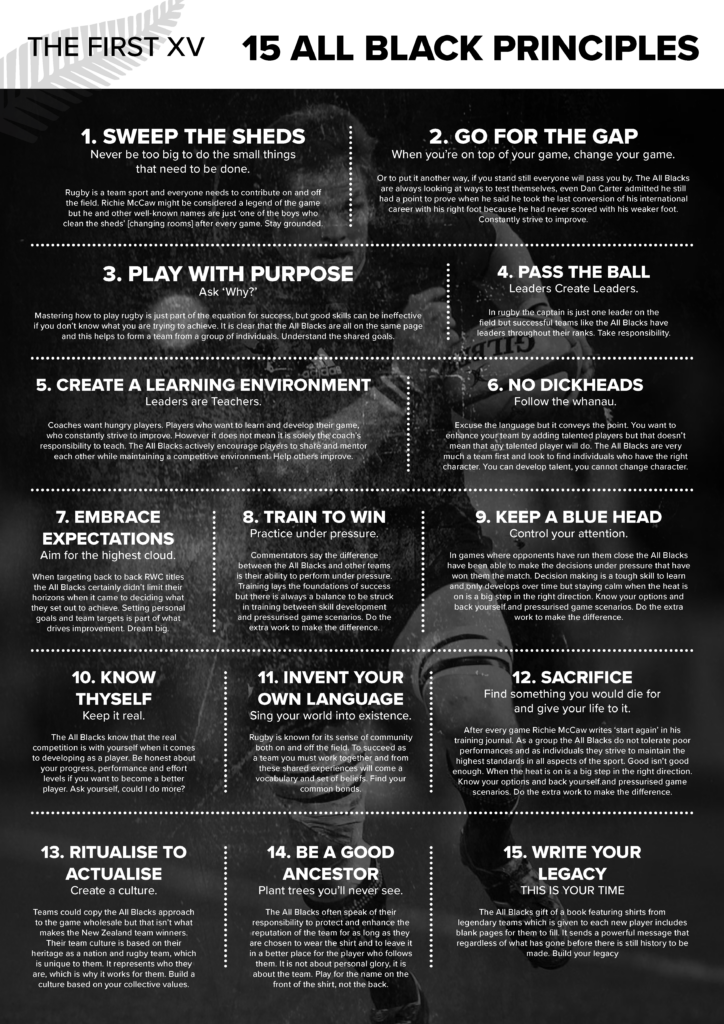
Whether you choose to borrow from the All Blacks or create some catch-phrases of your own, focus on a shared language and set of guiding principles that drive specific outcomes. Just like the All Blacks principle #13 – Ritualize to Actualize – the more we set a deliberate framework for behavior, the more likely we’ll be to win our (un)fair share.
Read More

Top CEO Keynote Speakers for 2026

Introduction CEO keynote speakers bring direct operating experience to the stage, which is something career speakers just cannot match. They have built companies, managed employees, ...

The True Impact of AI on Education

Introduction Every time I speak about education these days, I get some version of the question: "How do we stop students from using AI to ...

Top AI & Future Tech Keynote Speakers for 2026

Introduction Artificial intelligence has moved from the edges of corporate strategy to the center of it. In 2026, virtually every industry, from financial services and ...

Why Emotional Intelligence Matters for Business Leaders

Introduction I've spent most of my career surrounded by smart people, and it’s true that none of them got where they are by lacking intellect ...

How to Choose the Right Keynote Speaker for Your Event

Introduction Having delivered over 1,300 keynote speeches around the world, I’ve been involved in my fair share of speaker selection processes for corporate events, and ...

How to Master Change and Uncertainty

Introduction Every leader I work with is navigating some version of the same challenge right now, trying to figure out how to best navigate volatile ...

The Best AI Transformation Frameworks for 2026

Introduction Almost every leadership team I work with right now is trying to figure out how to actually transform their organization with AI. Not just ...

Building an Ethical Culture of Innovation

Introduction I recently read The New Yorker’s piece questioning whether Sam Altman can be trusted to lead OpenAI, given the importance of the company’s technology. ...

AI in Your Industry: CPG and Retail

About the Author Josh Linkner is a five-time tech entrepreneur, New York Times bestselling author, keynote speaker, and globally recognized innovation expert. He has founded ...