
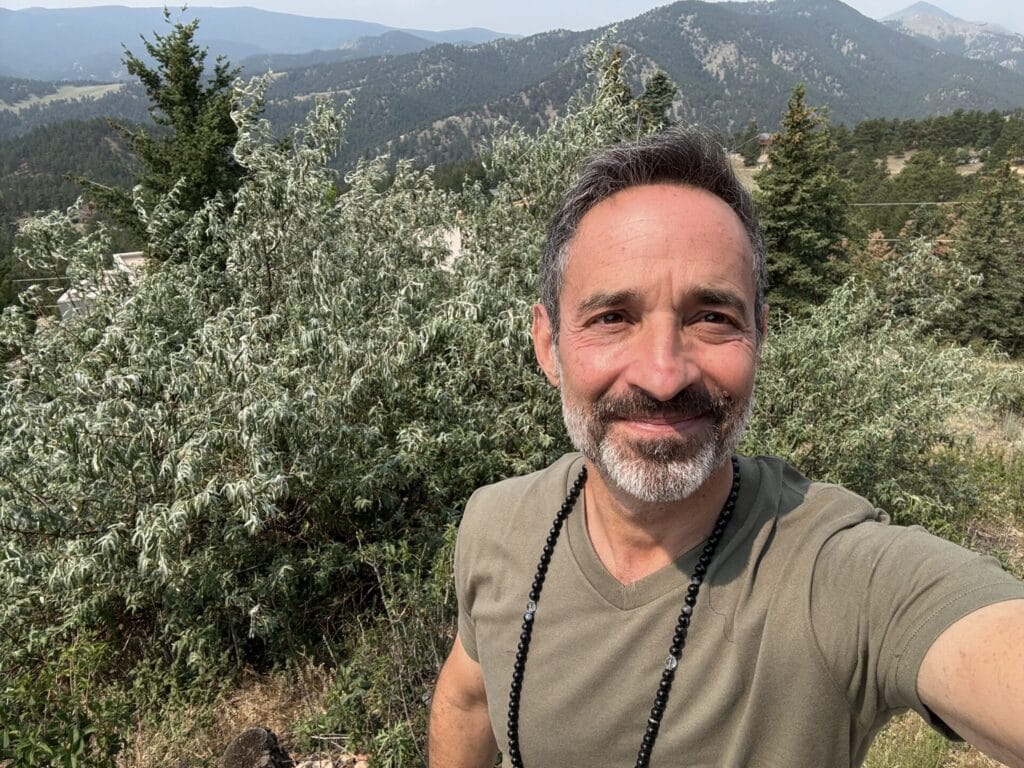
I just did something that scared the hell out of me. I took a one-month sabbatical.
I’ve been grinding hard for 35 years and never really took a proper break. Vacations were just working in different locations. The last time I didn’t check email for 24 hours was before email was invented.
I realized I was feeling the toll and decided about a year ago to take a full month off. I spent months planning to ensure business would go on and also to try to get the most out of the time off. So I decided to take July 2026 completely off.
First, I tried to optimize the plan the way I would in business, extracting every drop of marginal value. I’d take jazz vocal lessons in New York. I’d hire a trainer and work out for two hours a day. I’d read three books a week, while writing several fresh chapters of my next book. I’d catch up with old friends, drive my kids to and from camp every day, visit an ashram, take Tia on a romantic getaway, and maximize every minute.
Then I realized I was totally missing the point and that I’d just be applying work intensity to non-work stuff, completely skipping the reset I needed. So I narrowed it down to the things that mattered most, focusing on grounded presence, family, health, and rejuvenation.
I did a massive sprint in June, jamming in meetings, cranking out work, and trying to clear the decks. I did practice cycles with my team, established decision-making protocols in my absence, and systematized workflows so nothing would drop. I was trying to go into it feeling completely “clean.” Still, I was nervous, freaked out, embarrassed that I needed a break, and self-conscious about being frivolous and focusing on myself.
Here are the key takeaways:
1. Self-care demonstrates strength, not weakness.
Admitting we’re human and need a break is smart not only for ourselves, but for everyone and everything in our orbits. If I’d waited to have a major health event and then spent the same month in a hospital bed, that would be the definition of being pigheaded. I was dead wrong that taking care of yourself was a sign of weakness.
2. The world goes on without us.
Even for those that are organizational linchpins, one person’s absence provides space for someone else to step up. Self-importance is generally highly exaggerated. It certainly was for me. My various business efforts kept moving, perhaps better than if I were in the fray myself.
3. Nonstop grind is a fool’s game.
In the machismo world of business, we’re led to believe that rest is for wussies. Real leaders, the story goes, eat a bowl of nails for breakfast, laugh at vacations, and say things like “I’ll have plenty of time for sleep when I’m dead.” Of course, those are the same people that end up with heart attacks, strokes, ulcers, and high blood pressure. High-performing systems, including humans, are best in oscillating periods of sprints and recovery. One without the other is a recipe for a crash, not sustainable success.
4. I was more fried than I knew.
Over the years, I normalized the feeling of frenetic overwhelm. Once I was able to reset my nervous system, I couldn’t believe the difference. It was almost like life went from a black and white film at 3x speed to vibrant color at its intended pace.
5. There’s more than one bottom line.
Raised to be a high achiever since birth, I’d been measuring and prioritizing material success above all else. The reset helped me understand that there are additional bottom lines to optimize, including health, relationships, impact, family, and fun. Over-indexing on one at the expense of all others was a broken story I’d been telling myself for years.
6. Whitespace is the opposite of dead space.
I used to take pride in how many meetings I could squish into a single day, or how I could maximize every crumb of time for productive gain. The sabbatical taught me that open space is the source of fresh thinking, and that overpacking a calendar is actually a refusal to explore new possibilities. I learned that periodic empty space is the portal of discovery.
7. I’m beyond lucky.
Sure, there are plenty of things in my life that aren’t perfect. But the time off gave me a chance to bathe in gratitude, reflecting how lucky I am to have Tia as my best friend and love of my life, my four incredible kids who crack me up constantly, many close friends who love me despite my many shortcomings, solid health, a decent business, and the chance to create a positive impact. The break helped me focus on loving what I have, not craving what I don’t.
8. Life is more than work.
I love what I do, and feel called to my craft. That said, the time off helped me gain a much more balanced view of what’s important. I kidnapped my 10-year-old twins from camp one day and took them to a Detroit museum and then to lunch at a dive Chinese restaurant. I lay in the grass and stared at the clouds. I had long conversations with Tia and forgot about time. I played guitar, meditated, and awkwardly tried yoga. Of course there has to be a balance and our careers are important, but I finally learned that business isn’t the only thing that matters.
While I probably won’t take a full month off each year, I’m for sure going to incorporate a consistent recovery practice. I’ll experiment with time periods and formats, and my hunch is that each time will be easier and even more joyful. I also believe that I’ll see material gains in my work from the experience, even though that wasn’t the primary goal.
In retrospect, it strangely was one of the more risky things I’ve done (or so I thought), and it turned out to be a game-changer. I feel more alive, more creative, and more connected than I’ve felt in years.
You may not be ready for a full month, but I strongly encourage you to schedule whatever recharge works for you. Take it from the guy who would have mocked such a thing in the past, a reset is one of the best investments you can make.