
The blaring shrill from the station bell startles the team into action. Within minutes, the crew is speeding down the road, racing to challenge a raging blaze to a fistfight. Adrenaline pumps through the veins of both veteran and newly minted firefighters as they summon the courage to strut face-first into danger. The stakes couldn’t be higher. This is no drill, no warm up, no dry run. Within minutes, the team will be staring into the abyss of uncertainty. Lives hang in the balance as split second decisions will forge legacies or tragedies.
While you and I may not face such extreme conditions in the business world, the stakes often feel just as high. Our companies and careers can shift in an instant as we tackle increasingly complex and difficult challenges. Important sales calls, labor negotiations, and supplier agreements require the same skill, tenacity, and focus as the brave men and woman who battle intense flames.
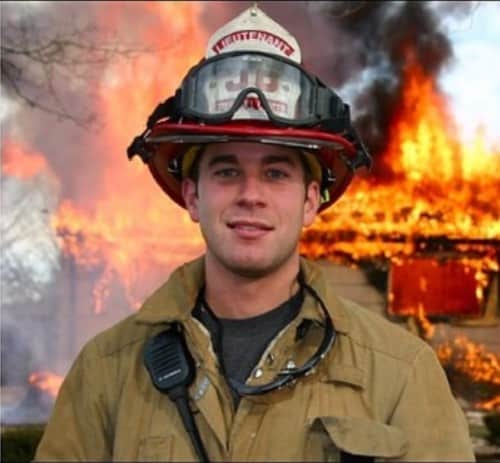
I recently had the chance to meet Chris Poisella, a dynamic leader who has worn both the protective helmet of a fire department lieutenant and also the Windsor knot of a high-ranking corporate executive. I learned that the seven-step approach he took to take down ferocious blazes is also a powerful strategy to meet the raging fires of the business world:
Step 1: Training. While certain unexpected experiences may be completely unpredictable, there’s an opportunity to train in advance for the majority of situations. Firefighters not only embark on initial training, but also extensive ongoing training and skills development that are critical for preparedness. Pro athletes spend 90% of their time training to deliver peak performance on the field, yet in the business world, we rarely take the time for professional development. To ensure the best outcomes, firefighters prioritize training so that they can deliver top performance when it matters most.
Step 2: Pre-Planning. Great fire chiefs make sure they know their town and surroundings. They know the big buildings inside and out. They know the roads, water supply, and the names of their colleagues who provide other emergency services. While you can’t plan for everything, knowing the landscape in advance can deliver a huge advantage when you’re in the midst of an actual battle.
Step 3: Assessment. Chris tells me that 911 calls are often inaccurate. In moments of trauma, people tend to either over-inflate the circumstances or under-report the seriousness of the challenge at hand. Accordingly, the best firefighters try to hear the story from as many callers as possible so they can get a feel for what’s really going on. In the business world, reacting to only one stream of information can easily derail us. Like the firefighters, try to triangulate the data to form an accurate picture of the obstacles you’re facing before deciding on the best course of action.
Step 4: Initial Plan of Attack. While in-route to the scene, the fire chief makes an initial decision on how to best attack and who will take one which roles. In this way, the team knows exactly what to do upon arrival instead of wasting precious time syncing up in the field. Before arrival, everyone knows his or her primary responsibilities and for what they’ll be held accountable.
Step 5: Arrival. Now the leader is finally seeing things firsthand. This initial landing period is critical to success as the chief does a 360-degree look at the situation. While the team leaps into action, the leader assesses hazards, determines resource needs, and looks to adapt to what are often changing conditions in the field.
Step 6: Implementation. As the team battles the beast, the leader’s role is to listen. Initial reports from key staff help guide the leader to make real-time adjustments. While many important roles have been delegated, those front-liners become the eyes and ears for the leader who may need to pivot the strategy with speed and precision. The objective is to bring the situation to a state of resolution as quickly as possible. In fires, this under-control state means no lives or additional property in jeopardy. In business, the initial state may be to reach a verbal agreement with a customer. The key point is to tackle the monster in phases. First, get it under control. Then, once the initial results are achieved, finalize the details.
Step 7: Debrief. Once the danger has subsided, the team has an open and thorough discussion on every aspect of their approach. The goal is to learn and grow, to ensure they are even more prepared for their next mission. Everyone – including the leader – becomes a learner so they can drive optimal performance for the future. In the midst of our daily grind, it is easy to skip this step. But if you want to create sustainable growth and success, putting your performance under the microscope of examination can be one of the most important steps along the way.
In the same way firefighters rely on this systematic approach to save lives, the best leaders also leverage a proven process rather than simply shoot from the hip. Committed heroes like Chris Poisella not only keep our communities safe; they also provide a roadmap to success for our professional lives. Follow their approach and you’ll be able to extinguish your challenges long before they spread into a four-alarm blaze.
The station bell is ringing for you right now. It’s your turn to respond.