

One of the best role models for creativity and innovation today isn’t an AI company or a Silicon Valley darling. It’s a Brooklyn art collective called MSCHF.
You may have encountered their work without knowing the name. They injected holy water into Nike Air Max sneakers so wearers could literally “walk on water”—the Jesus Shoes.
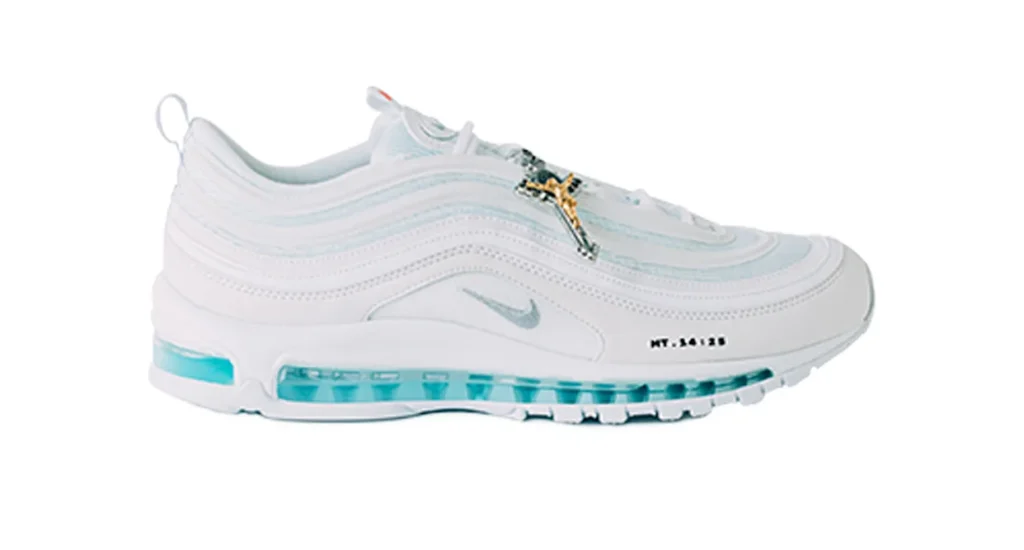
Then they made Satan Shoes with a drop of human blood inside, collaborating with Lil Nas X. Nike sued them. The resulting publicity was worth more than any ad campaign.
They bought a $30,000 Damien Hirst spot painting, cut out the individual dots, and resold them for $480 each.
They gave 5,000 strangers keys to a single car somewhere in New York City and let chaos ensue.
They created an ATM that publicly ranked users by their bank balances and installed it at Art Basel Miami.

Their cartoonish Big Red Boots sold out in minutes and generated a resale market markup of 300% within hours.
When they launched in 2019, the founders made a commitment: ship a new project every two weeks, come hell or high water. They had no roadmap for where it would lead. They simply trusted that making interesting things consistently would open doors they couldn’t yet see.
That constraint—the non-negotiable rhythm—became the engine of everything.
They’ve since evolved beyond the strict two-week schedule, but the discipline of those early years built the creative muscle that still powers them today.
Most organizations wait for the perfect idea before committing resources. MSCHF committed to the cadence first and let the ideas catch up. The deadline wasn’t a limitation; it was liberation.
Inside their studio, the most common creative feedback sounds almost counterintuitive: “Can we make it shittier?” What they’re really asking is whether they can strip an idea down to its purest form. Protect the original spark. Kill the complexity before the complexity kills the concept. Most creative work drowns in additions. MSCHF edits ruthlessly.
They also hunt for grey areas on purpose. Cofounder Kevin Wiesner explains that loopholes and ambiguity are “fertile ground for exploration.” Where most of us see risk, they see creative oxygen. The tension between what’s allowed and what’s possible is precisely where interesting things live.
You don’t need to sell sneakers filled with holy water or get sued by Nike to apply these lessons.
Harness the power of constraints. The two-week cadence forced MSCHF to ship imperfect work constantly. That rhythm built creative muscle faster than any strategic planning session ever could.
Explore the grey areas. The most interesting opportunities often live in spaces others avoid because they’re ambiguous or unconventional. Look where your competitors won’t.
Simplify ruthlessly. When an idea feels bloated, ask yourself the MSCHF question: can you make it shittier? Strip it back until only the essential remains.
The world has enough predictable. This week, go find something unexpected.
To your creative success…
Subscribe here to get these posts in your inbox.
If you’d like to have me speak at your upcoming event, connect here.
Read more editions of