
There’s a principle in jazz that every business leader and professional should know about. It’s called comping. It’s short for “accompanying,” but that doesn’t quite do it justice.
Comping is the active, improvised, responsive work a rhythm section does to shape the solo above it: the chords the pianist chooses, the notes the bassist leaves out, the way the drummer answers a phrase before it’s finished.
It’s creative work of the highest order. It just happens out of the spotlight.
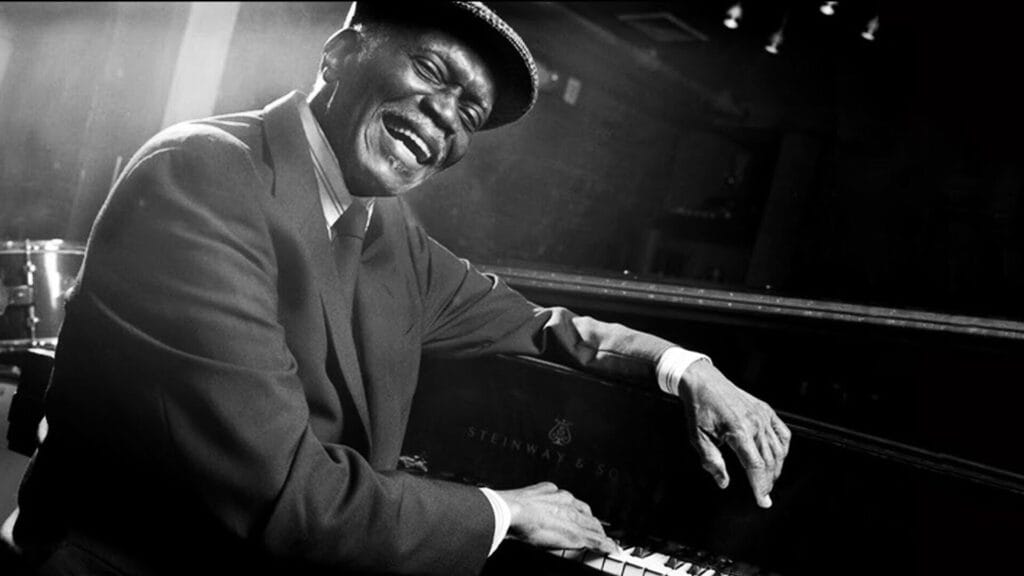
Consider Hank Jones.
In May 1962, Marilyn Monroe sang “Happy Birthday, Mr. President” to John F. Kennedy at Madison Square Garden in front of 15,000 people. It’s one of the most replayed moments in American pop culture. You’ve probably never heard the name of the pianist a few feet away.
His name was Hank Jones. Marilyn was shaky with nerves. Jones was the floor underneath her, and that was his whole career.
Over 7 decades, Jones played piano behind nearly everyone. He toured with Ella Fitzgerald, recorded with Billie Holiday, Sarah Vaughan, Charlie Parker, Coleman Hawkins, and Cannonball Adderley. He was the house pianist at CBS for 17 years. He played gigs into his 90s. When a French journalist told him he was a giant of jazz, Jones disagreed. He called himself “a dwarf in the service of the music.”
We tell ourselves a different story about creativity. There’s the lone genius, the visionary, the person at the front of the room with the idea. It’s a story that ignores nearly everything that makes great work possible.
The truth is that every solo we admire is being co-authored, in real time, by musicians whose names we never learn. The pianist is choosing which version of the song the soloist gets to play over. The rhythm section is shaping the gravity and pacing underneath, sometimes answering phrases before they’re finished.
Most of us spend more time comping than soloing. We’re supporting a colleague’s presentation, building the model that informs a decision someone else will make, prepping the work that lets a teammate shine. The temptation is to treat that work as second tier. As though the spotlight is the only place real creativity lives.
Hank Jones would disagree.
Here’s what comping asks of us, whatever the medium:
Listen before you play. Comping is responsive work. You arrive empty and attentive, and your contribution emerges from what’s unfolding in the moment. The same is true in a meeting, on a project, in any conversation with a teammate who needs help finding their own line.
Choose what not to do. Comping is a discipline of restraint. Every chord the pianist plays takes up space the soloist could have used. Great compers leave room. In a professional setting, the equivalent is resisting the urge to fill every silence with our own contribution. Sometimes the most generative thing we can do is hold back so someone else can find their way to the idea.
Make the soloist sound better. This is the heart of it. The comper’s job is to set conditions in which someone else can perform at the edge of their ability. In business, that instinct is one of the most undervalued forms of leadership I know.
We all want to be great soloists, and there’s nothing wrong with that. But there’s also a lot to be gained from learning to be “in service of the music.”
To your creative success…
To your creative success…

Subscribe here to get these posts in your inbox.
If you’d like to have me speak at your upcoming event, connect here.