

There’s a term tossed around Silicon Valley that I love: non-consensus.
It’s basically doing the unorthodox, unexpected thing instead of the obvious thing that everyone else gravitates to.
Unfortunately, the term is more often ignored than embraced due to herd mentality. Investors look at a new pitch and try to figure out what successful company it resembles, then fund the ones that fit a familiar template. “It’s Uber for dog walking.” “The founders are ex-Stripe.” If an idea looks like something that worked before, it’s safer to back.
The strange ones get politely shown the door. But most of the companies that have produced the biggest returns in venture history started off unfamiliar and a little weird, and they got passed on by dozens of firms before someone finally took the leap.
Having spent the last 16 years as a venture capital investor, I’ve always leaned into non-consensus opportunities. The bets that actually matter often look “wrong” to most traditional investors. Yet it’s the odd ones that tend to redefine entire categories.
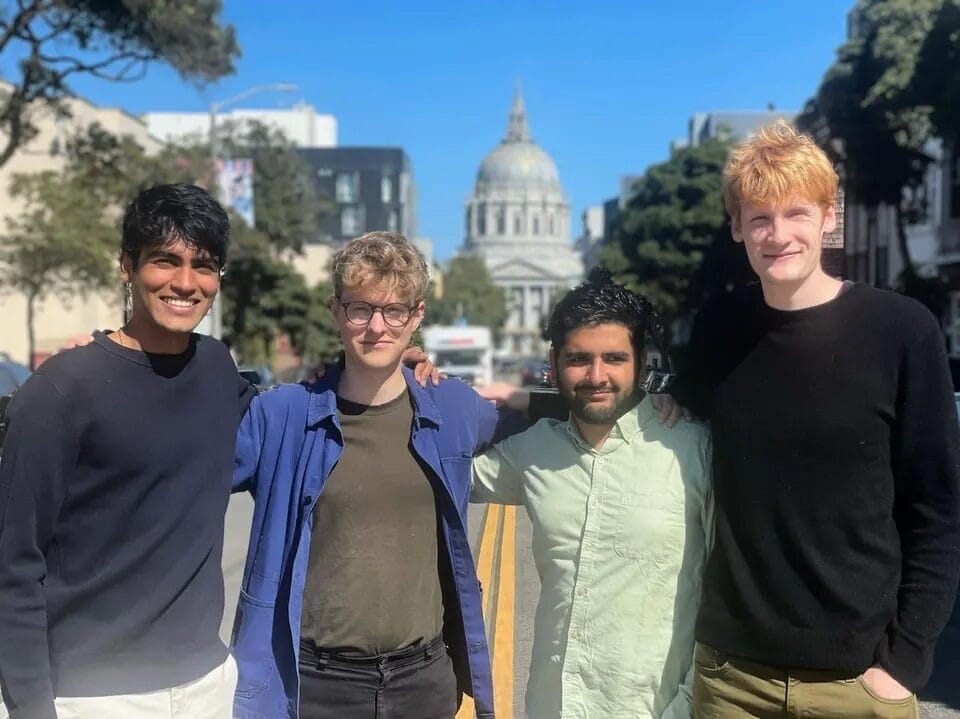
Take a company called Cursor. It’s an AI-powered tool that helps software developers write code faster. Today, it’s one of the fastest-growing software companies on earth, with around a billion dollars in annual revenue and a valuation of $29 billion.
In 2022, four MIT computer science students in their early twenties walked away from offers at the big tech firms to start it. Their first attempt was an AI tool for mechanical engineering software, which flopped within a year. They pivoted to coding in 2023, betting that AI was about to remake software development and that everyone else building in the space was thinking too small.
Almost nobody thought they had a chance. They were walking into a market that appeared to be locked up.
Software developers do their work in a program called an editor, the way a writer might use Microsoft Word. In 2022, the dominant editor in the world was Visual Studio Code, made by Microsoft. Microsoft also owned GitHub, the platform where developers store their code, and GitHub had recently launched an AI coding assistant called Copilot that plugged directly into Visual Studio Code.
On top of all that, Microsoft was OpenAI’s biggest investor. The conventional wisdom was clear: Copilot was going to win the category, because Microsoft already owned every piece of the puzzle.
Cursor’s founders looked at the same picture and reached a different conclusion. While most other AI coding tools in 2022 were small add-ons plugging into existing editors, they took Microsoft’s open-source editor code and used it to build a competing editor of their own, designed entirely around AI from the start. Their thesis was simple… If their version was actually better, developers would switch.
To most observers, the bet looked like a losing one. Going head-to-head with Microsoft on its home turf, with a more ambitious technical approach than the rest of the field, wasn’t an obvious winner. Cursor raised a modest seed round from a few early believers and started building.
Then, their idea worked. By late 2024, Cursor was getting unsolicited offers at $2.5 billion. A year later, the company had crossed a billion dollars in annual revenue and raised at a $29 billion valuation. SpaceX reportedly came in with a $60 billion offer to acquire it outright. Suddenly, there was consensus, and the investor market quickly repriced once the conviction caught up.
Non-consensus bets that pan out eventually become consensus. The real payoff is getting in while the idea is still non-consensus. The skill is the willingness to go against the grain until the market catches up.
You don’t have to be an investor or the head of a billion-dollar startup to think this way. The same kind of bet exists in every field.
Sit with a simple question for a few minutes: what’s something you believe to be true that most of the other people you know don’t? It’s an uncomfortable prompt because most of us, when we look honestly, find that almost all of our beliefs are just the consensus of the rooms we spend time in.
The work is to step outside those rooms. Pay attention to the ideas your industry dismisses, because plenty of those dismissals are just inaccurate conclusions repeated by insiders who never bothered to test them.
Spend time with people who don’t share your assumptions, especially the ones who don’t already know what’s supposed to be impossible. And get comfortable being misunderstood for a while.
To your creative success…
Subscribe here to get these posts in your inbox.
If you’d like to have me speak at your upcoming event, connect here.