
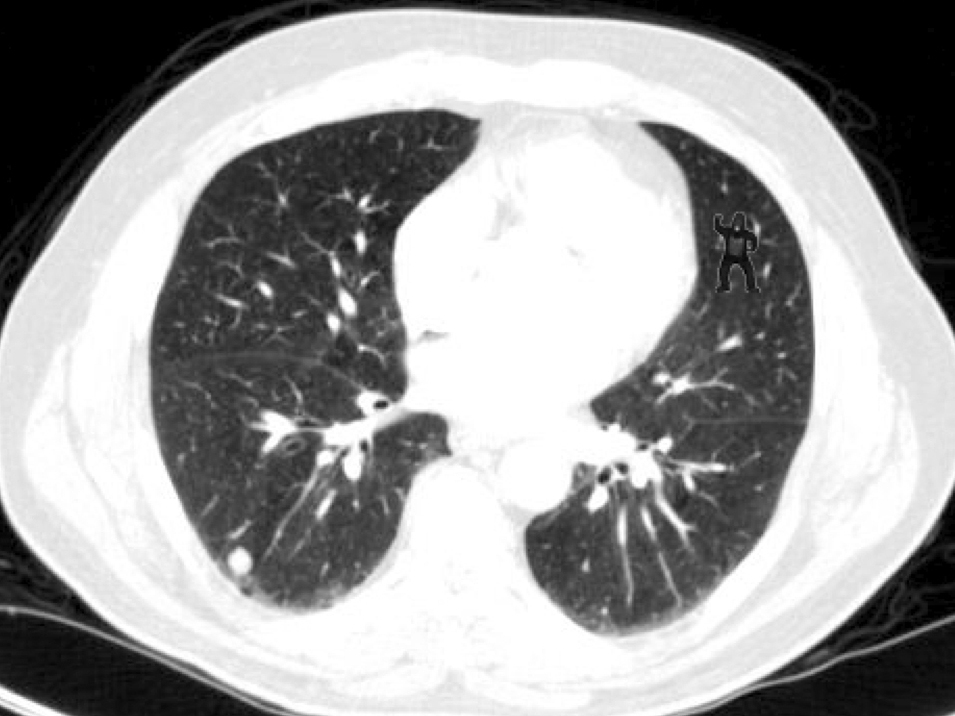
In 2013, Harvard researcher Trafton Drew slipped a small image of a gorilla into a CT lung scan and handed it to twenty-four radiologists. The gorilla was forty-eight times larger than the tumor nodules they were trained to spot.
Eighty-three percent never saw it.
Eye-tracking later showed that most of them looked directly at it.
These radiologists were elite. They were doing exactly what years of training had taught them to do — scanning the image for the specific patterns that signal disease. The gorilla wasn’t on the list, so the gorilla didn’t exist.
This is the strange shadow that follows every kind of mastery. The training that makes you fast in your field also decides what counts as worth seeing.
Whatever falls outside the pattern becomes invisible. Your expertise filters it out quietly, long before it reaches your attention.
Look at almost any disruption story and you’ll find some version of this.
Two bicycle mechanics from Dayton got a plane in the air while credentialed aviation engineers were still pushing dead-end designs.
A door-to-door fax machine salesperson with no fashion background turned $5,000 into Spanx.
A software entrepreneur with no video rental experience built Netflix while Blockbuster kept renovating its stores.
The breakthroughs kept coming from people whose lack of expertise let them ask questions the experts had already stopped asking.
Mastery is still a gift. The work is keeping it from becoming a cage.
There’s a word for the antidote: shoshin, the Zen concept of beginner’s mind. Shunryu Suzuki described it as a state where the beginner sees many possibilities and the expert sees only a few. The point is to hold what you’ve built loosely enough that something new can still get in.
Three habits help you cultivate it:
Approach the familiar with fresh eyes. When you sit down to a problem you’ve seen a hundred times, deliberately pretend it’s your first. Walk through the basics. Ask the questions you’d normally skip past. You’ll often find a corner you’d long since stopped checking.
Invite the outsider. Pull someone into the conversation from outside your usual circle — a colleague from a different department, a friend from another industry, your kid at the dinner table. Their questions will sound naive, and they’ll show you exactly what you’ve stopped seeing.
Re-examine what you’re sure of. Once a quarter, pick a belief you treat as settled and put it back on trial. Markets shift, customers change, and old answers expire. Certainty has a shelf life.
The radiologists in the Harvard study were excellent at their jobs. So are you. The real test is whether you still notice what you’ve been trained to overlook.
Mastery is a powerful lens. The trick is keeping a beginner’s eyes behind it.
To your creative success…