
My brother @Ethan Linkner dropped a word into an email thread last week, and I haven’t been able to stop thinking about it.
The word is “sisu.”
It’s Finnish, and it has no clean English translation. Sisu (pronounced see-soo) describes an extraordinary form of inner strength and stoic determination. It combines grit, resilience, and tenacity into a single mindset of refusing to give up, especially when the situation seems hopeless.
The word comes from the Finnish root sisus, which literally means “interior” or “entrails” — the part of you buried deepest. So at first glance, the closest English equivalent looks like guts. Same metaphor, same general meaning. We say someone has guts, we talk about intestinal fortitude, and we tell people to “gut it out.” Both languages, somewhere along the way, decided that real courage lives below the neck.
But the people who’ve spent the most time with the word say no single English term — guts included — quite captures it. Time magazine, introducing sisu to American readers in January 1940, described it as “a compound of bravado and bravery, of ferocity and tenacity,” and the ability to keep fighting after most people would have quit. That’s the trouble with picking one English word. Sisu isn’t just grit or guts. It’s all of those qualities, layered together.
The Finns treat sisu as a national characteristic — the quality that allowed a small, outnumbered Finnish force to hold off the Soviet army in 1939, but also the quiet stubbornness they carry into education, business, and the long dark winters that would crush most people’s spirits.
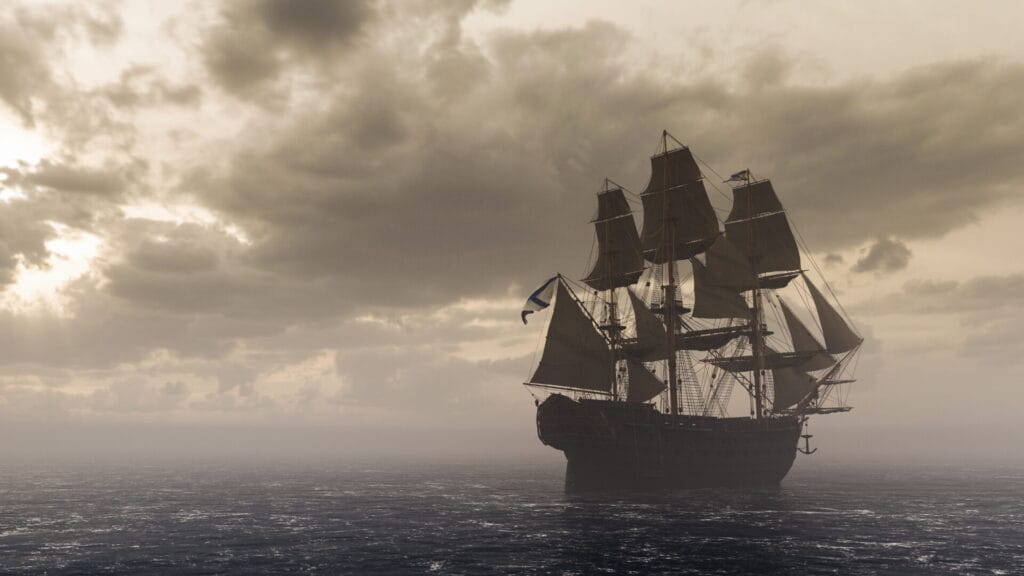
My brother described it as “effectively pirate energy,” and I think that’s exactly right. Sisu is the willingness to charge into uncertain waters, to hold your course when the storm gets worse instead of better, to fight with whatever you’ve got when the odds say you shouldn’t bother.
Here’s a great example from the business world:
Melanie Perkins was a 19-year-old college student in Perth, Australia, when she realized the entire design software industry was broken. Programs like Photoshop took months to learn, cost a fortune, and locked design behind a wall most people couldn’t climb.
She started small. Her first company, Fusion Books, was a yearbook design tool she ran out of her mom’s living room, then later from a former hair salon. She and her co-founder Cliff Obrecht bootstrapped for years, working around the clock. She was broke, and her health suffered. By her own admission, she’s just “very bad at giving up.”
Fusion Books grew. Within a few years, it had become Australia’s largest yearbook provider. But it was always meant as a stepping stone to a bigger vision — design software for everyone, in any browser — and that vision needed real capital.
Her break came in 2010, when venture capitalist Bill Tai flew to Perth to judge a startup competition. She got a few minutes with him at a dinner, pitched Canva, and he invited her to San Francisco.
And then she ran straight into several walls. Over 100 investors said no, and the reasons weren’t really about the product. They were about her: too young, too Australian, no Stanford degree, dating her co-founder. She heard every version of “you’re not the kind of person we back.”
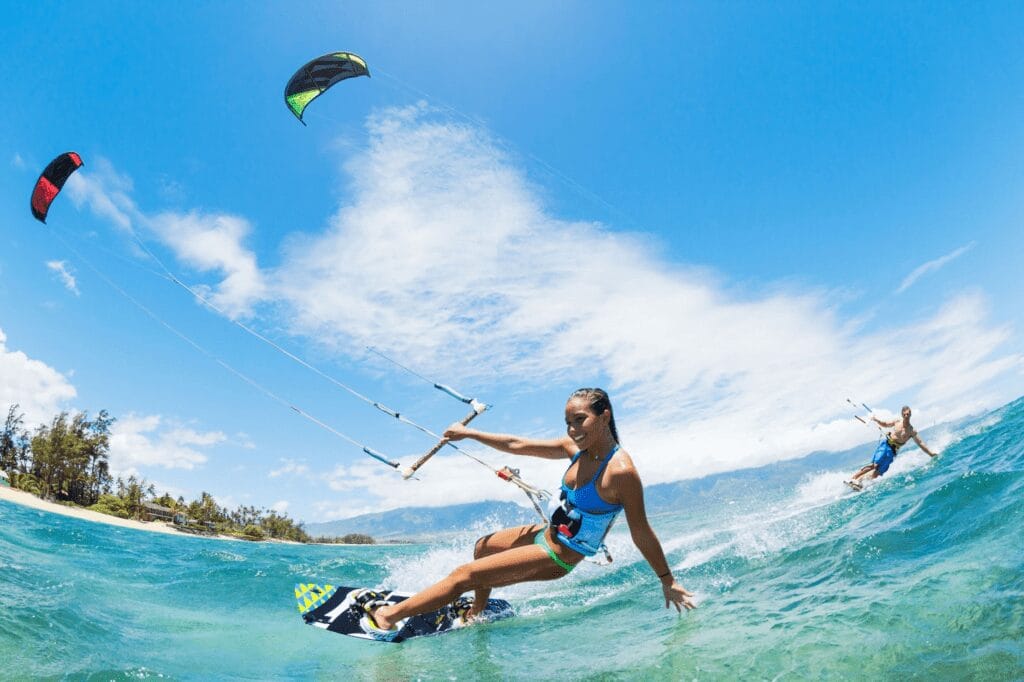
Tai himself stayed interested. But the real introductions happened at a place most founders couldn’t access: MaiTai, his exclusive networking retreat for tech investors, built around kite-surfing. If she wanted to be in those rooms, she had to learn the sport.
By her own description, kite-surfing was “peculiar” and “dangerous” and not something she’d have ever tried. She taught herself anyway, because it’s what had to be done in pursuit of her larger goal.
Even then, the deal didn’t close fast. Tai eventually committed, but only after he’d introduced her to Lars Rasmussen, the co-founder of Google Maps, who agreed to be Canva’s tech advisor, and then spent the next year rejecting every engineer she brought him. The deal hung in limbo while she kept searching.
It took three years from her first pitch to her first check. Today, Canva is worth over $40 billion with hundreds of millions of users.
Guts got Melanie on the plane to San Francisco. Sisu kept her in the water for three years until someone finally said yes.
That’s pirate energy. That’s sisu.
To your creative success…
Subscribe here to get these posts in your inbox.
If you’d like to have me speak at your upcoming event, connect here.