
A nurse is halfway through changing an IV bag when a monitor starts beeping down the hall. She hustles over, silences it, and finds a sleeping kid whose oxygen level dipped for a few seconds and then corrected itself. Before she makes it back, another one is going off two doors down. A single patient can set off as many as 300 alarms a day, and very few of them require anyone to act immediately. A busy ICU can sound like a fleet of garbage trucks backing through a video arcade. Luckily for the nurse, a jazz pianist and a drummer are on the case.
All that racket keeps patients from sleeping, and it leads to what the medical world calls alarm fatigue, which is a lot more serious than a noisy hallway. Overwhelmed nurses start tuning the beeps out the way most of us ignore a car alarm in a parking garage, and sometimes the one they miss is real. In one stretch of under six years, the FDA’s records logged more than 500 alarm-related patient deaths, and patient-safety experts have ranked alarm fatigue among the top hazards in hospitals.
Two teams recently took on alarm fatigue, and each went after a different part of the problem. One focused on the noise pollution itself: the harsh, sleep-depriving sound of the alarms. The other focused on how often the alarms go off in the first place.
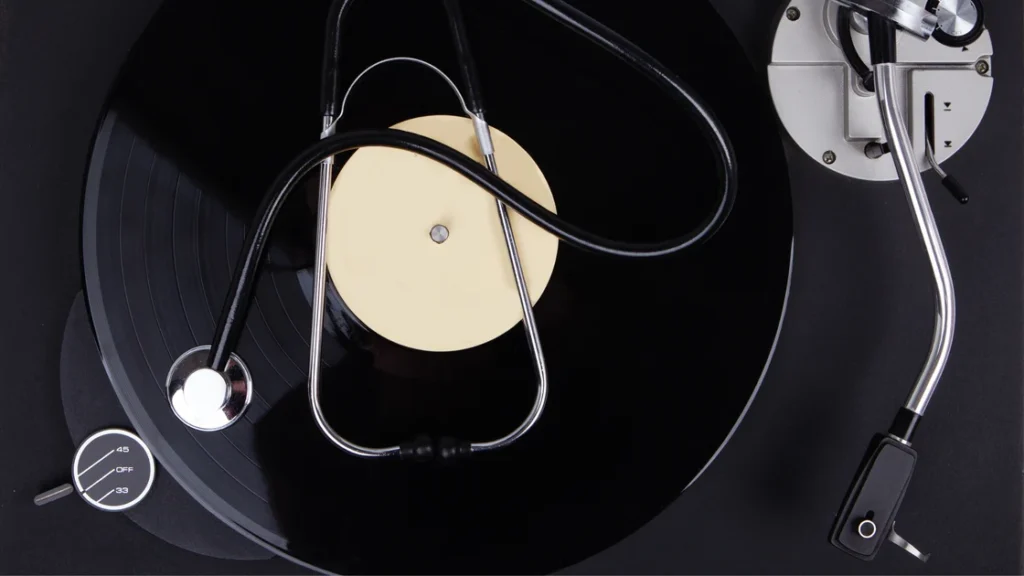
A jazz pianist and a drummer took on the noise problem, which is why, as a jazz guitarist, I’m a particularly big fan of this story. Joseph Schlesinger, an anesthesiologist at Vanderbilt University Medical Center, paid his way through college playing jazz piano in New Orleans clubs and on cruise ships. After years of suffering through the incessant beeps himself, he teamed up with Michael Schutz, a percussionist who studies music cognition at McMaster University in Canada, to figure out how music could make alarms more sonically bearable. It’s like that old joke: “An anesthesiology professor and a music-cognition researcher walk into a bar…”
Their experimental alarms swap the flat electronic beep for sounds with more music in them. For example, they created a blood pressure alarm that thumps like a heartbeat, and its pitch climbs or drops to tell caregivers which direction the trouble is heading. In one study, the musical version helped people identify an urgent alarm about 10% faster, and in another, listeners found xylophone-style tones easier on the ears than the usual beeps. As Schutz told The Wall Street Journal, it “doesn’t need to be the New York Philharmonic in the operating room,” but there’s plenty that alarm designers can learn from music.
The other team, a pediatric group at Stanford Medicine’s Lucile Packard Children’s Hospital, went after how often the alarms go off. They programmed a little patience into the bedside monitors. Now a monitor waits to see whether a small blip fixes itself before it makes a sound, and it saves the noise for readings that are serious or aren’t going away. Alarms per patient fell 75% in the pediatric ICU and 82% in the cardiac unit, with no increase in emergencies.
These teams didn’t cure cancer, but they’re making an impact for healthcare professionals and patients. One changed a sound, and the other added a short delay. Their work is a great example of what I call a Big Little Breakthrough, a small creative act that unlocks massive rewards over time. Most of us overlook fixes like these because we assume innovation has to be enormous to count. In reality, they’re low-risk and within reach of anyone paying attention, and they add up to big things.
Finding a Big Little Breakthrough can be as simple as picking a minor annoyance or a little inefficiency and changing it. In your world, it might be a form that asks customers for the same information twice, or a process that requires seven approvals when it really only needs one. String together enough small tweaks, and you’ll end up with something you might even dare to call innovation. To accelerate the process, open it up to collaboration and cast a wide net for expertise. Find the drummer to your doctor.
As far as I know, the anesthesiology professor and the music-cognition researcher never did walk into a bar. They were too busy teaching a heart monitor to play the xylophone.
To your creative success…

Subscribe here to get these posts in your inbox.
If you’d like to have me speak at your upcoming event, connect here.