
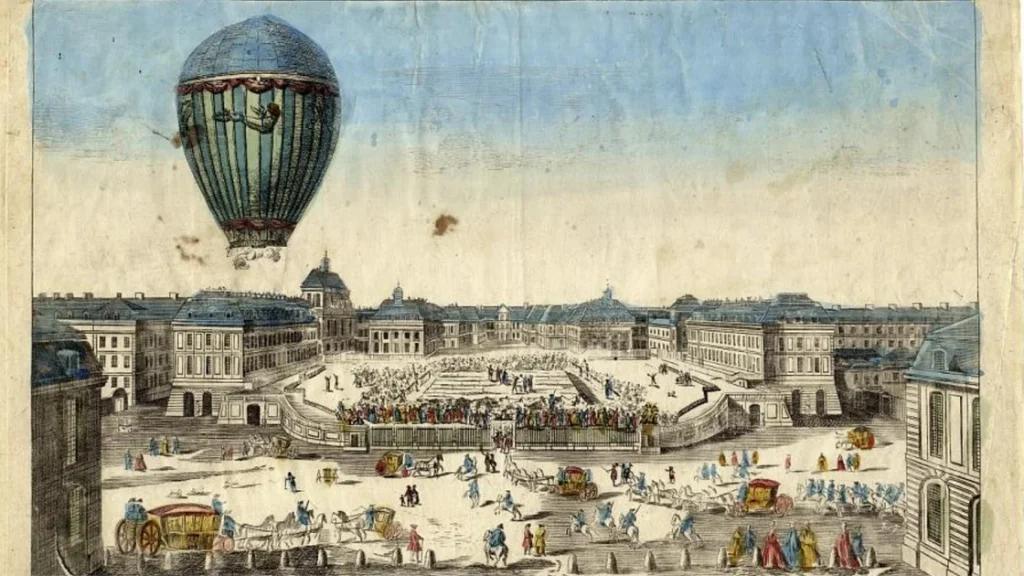
A handful of workmen stoke a smoky fire of damp straw and rags, and a giant heap of painted cloth fattens into a balloon roughly seven stories tall. It’s the fall of 1783, and the yard behind a Paris wallpaper factory smells like someone is barbecuing a haystack. A young man steps onto a narrow wicker balcony at the bottom of the flying balloon. He climbs about 80 feet, exactly as high as the ropes allow, and stops. He’s higher than he’s ever been, but nowhere near the altitude he’s aiming for.
The young man was Jean-François Pilâtre de Rozier, a French science teacher. A few weeks later, he took a far bigger leap of faith and removed the ropes. He climbed roughly 3,000 feet and drifted more than five miles across the city while a huge crowd stared up in amazement. It made history as the first human flight.
De Rozier’s two flights illustrate a powerful concept that most of us overlook in our personal and professional lives. A tethered balloon can exert the effort of an army but never rise, whereas an untethered one flies high with very little propulsion.
I believe humans are also meant to rise naturally. It’s less about effort and push than removing the blockers. Many of us forget this when something at work won’t get off the ground, and we respond by forking in more straw. Instead of wasting their fuel trying to lift something tied down, the people who fly highest spend their energy finding and removing the tethers.
Michael A. Singer, a deep spiritual teacher and former tech entrepreneur, uses the same image to explain what holds people back. If you want a balloon to go up, he says, don’t pump in more hot air. In his book Living Untethered, he points out that many of our tightest ropes are ones we carry around inside such as old thoughts, feelings, and habits we’ve stored yet never released.
Those personal tethers are the trickiest because we tied them ourselves, usually with the kind of double knot a parent puts in a five-year-old’s sneakers. A fear of looking foolish or the need to be the smartest person in the room can hold us down harder than any budget. Personally, I’ve caught myself countless times working twice as hard on a stuck project while a rope I’d tied myself was still staked in the grass.
If you’re putting in more and more effort and getting less and less in return, there’s a good chance something is tied down. Instead of asking, “How do we push harder?” ask, “What’s the tether here?” The answer is often surprisingly small and easily unknotted.
After his second flight, De Rozier landed outside Paris with enough straw left to fly four or five times farther. Chances are you already have plenty, too. Cut the ropes first, and see how far your straw takes you.
To your creative success…
Subscribe here to get these posts in your inbox.
If you’d like to have me speak at your upcoming event, connect here.
Read more editions of